
Coal County Arrest Warrants Explained
An arrest warrant is a judge's order telling law enforcement to bring a named person before the issuing court. Coal County publishes no adult arrest-warrant application form and no live list, so the practical route runs through the public court record and the agency that serves the paper. In District Court, the sheriff's own page says the office serves warrants and process ordered by that court. A city case works differently. Coalgate's municipal code hands the command to the chief of police or an officer he authorizes, and that authority flows from the city judge rather than the county bench. Two tracks, two sets of records, and two offices to ask. Sorting out which one holds your warrant is the first real task, because a records request aimed at the wrong office will come back empty and cost you a trip or a phone call you did not need to make.
The Sheriff’s Coal County Service Role
The official Coal County Sheriff page lays out jail work, apprehension, and service of warrants and process ordered by District Court. It names no warrant unit. There is no public search form, no update schedule, and no phone line that confirms every active order. So split your questions by office: the sheriff for a service record, a return, or a jail record; the Court Clerk for the order itself. A serving agency cannot substitute for the issuing court's current docket. And a blank sheriff web page proves nothing about whether a warrant exists.
Coal County Sheriff
District Court process and sheriff-held records.
580-258-2734
Verify the contact before relying on it.
Coal County Court Clerk
District Court file, docket, and copy questions.
580-927-2281
Inside a Coal County Arrest Warrant
A Coal County court record may show an order's basic identity while withholding operational detail. Read the court, the case number, the order type, the date, and the status first. Those fields tell you where the case lives. A blank form is not proof of a live warrant; only the issuing court can confirm that.
| Issuing court | Coal County District Court or a named city court. |
|---|---|
| Case number | Links the order to the filed case and later docket events. |
| Charge or statute | Use the public wording and ask the clerk if the document is restricted. |
| Judge or order date | Shows who entered the order and when it was filed. |
| Command to arrest | States that law enforcement should bring the person before court. |
| Service and return | May sit with the sheriff, city police, or court file. |
| Bond or release terms | Must come from the current order or issuing court. |
OCCA Form 13.17e shows the structure of a Coal County municipal cost-arrest form. It is a blank model, not any person's record.
Coalgate’s Municipal Arrest Command
Coalgate's 2020 code assigns ordinance cases to the municipal court. Once a complaint is approved or endorsed by the city attorney or judge, the code describes a warrant commanding the chief of police, or an officer he authorizes, to arrest the defendant and bring that person before the municipal judge. The city clerk or deputy clerk doubles as municipal court clerk. Remember the limits of this example. The code governs Coalgate, and Coal County's other towns, including Tupelo, Lehigh, Phillips, and Centrahoma, may run their city courts differently. Check for later amendments before treating the 2020 text as current procedure. Read the Coalgate code source for the Article 12 provisions. It offers no countywide bond schedule.
Comparing Arrest Summons and Bench Warrants
The same word, warrant, can hide different court events. A summons tells a person to appear. A bench warrant usually follows a missed appearance or a court-order issue. An arrest warrant in Coal County commands an arrest under the issuing court's authority.
| Process | Typical local record | First confirmation |
|---|---|---|
| Summons | Notice to appear in a District or municipal case | Court named on the notice |
| Bench or FTA warrant | Missed date or order-compliance event | Issuing court docket and clerk |
| Arrest warrant | Charging process and judicial command | Issuing court, then serving agency |
Coal County Orders and Service Records Differ
Sorting out who holds what saves real time. The court files the order. The sheriff or city police may receive and execute it. The return of service can land in the case file or sit in an agency record, and OSCN can display docket events while warning that its web information is not the official record. So before you make a public request in Coal County, name the piece you need: the order, the docket entry, the service attempt, the return, the jail record, or a certified copy. Ask the sheriff for a court action and you will be turned away. Ask the Court Clerk for tactical law-enforcement detail and the answer is the same, because that office simply does not hold it.
Record split: court status comes from the issuing court. Service status comes from the agency that received or executed the process.
Active Investigation and Juvenile Limits
51 O.S. §24A.8 lists warrant dispositions among law-enforcement public-record categories, but exemptions and redaction still apply. Protected investigation detail, witness information, tactical material, sealed orders, and other confidential fields may stay out of reach. Title 10A generally shields juvenile court and law-enforcement records, subject to statutory exceptions. Do not infer a juvenile warrant from an adult-facing Coal County search. Ask the lawful custodian what non-exempt record can be provided. Section 24A.8 and the current Title 10A compilation state these limits.
If There Is an Arrest Warrant
Confirm the court and the exact status before you act. Coal County offices promise no walk-in surrender route, no non-arrest appointment, no bond-window schedule, and no universal payment method. A lawyer can ask about a hearing, a motion, bond, appointed counsel, or another court-approved route instead.
Verify first: Use a number from the official court or county page. An unsolicited demand for cryptocurrency, gift cards, or preemptive bail is a scam warning sign.
- Save the case number and source.
- Ask whether the order is active, served, returned, recalled, quashed, or disposed.
- Ask which court action is required.
- Obtain written proof after the court acts.
- Recheck the docket and confirm with the Court Clerk.
The Oklahoma Attorney General scam warning supports direct verification.
Counsel and Indigent Defense Routes
In a District Court criminal case, the Oklahoma Indigent Defense System says the judge determines eligibility, and calling the state office alone does not get anyone a lawyer. Ask the Court Clerk, the court, the sheriff, or the jail which local form or appointment route applies in Coal County. The Coal County Legal Aid listing is an older referral source, so check whether it still works. Private counsel may also approach the issuing court about a setting or a surrender plan. No public source here guarantees that a lawyer can prevent an arrest or that a phone call changes the order. OIDS routing information should be read alongside the current court file, not in place of it, because the file controls what happens next in your case.
Federal Arrest Warrants Use Federal Records
Coal County sits in the Eastern District of Oklahoma, but federal records do not run through OSCN or the sheriff's general route. Use the federal clerk, PACER, or counsel. CourtListener and RECAP can be a free lead, not certification.
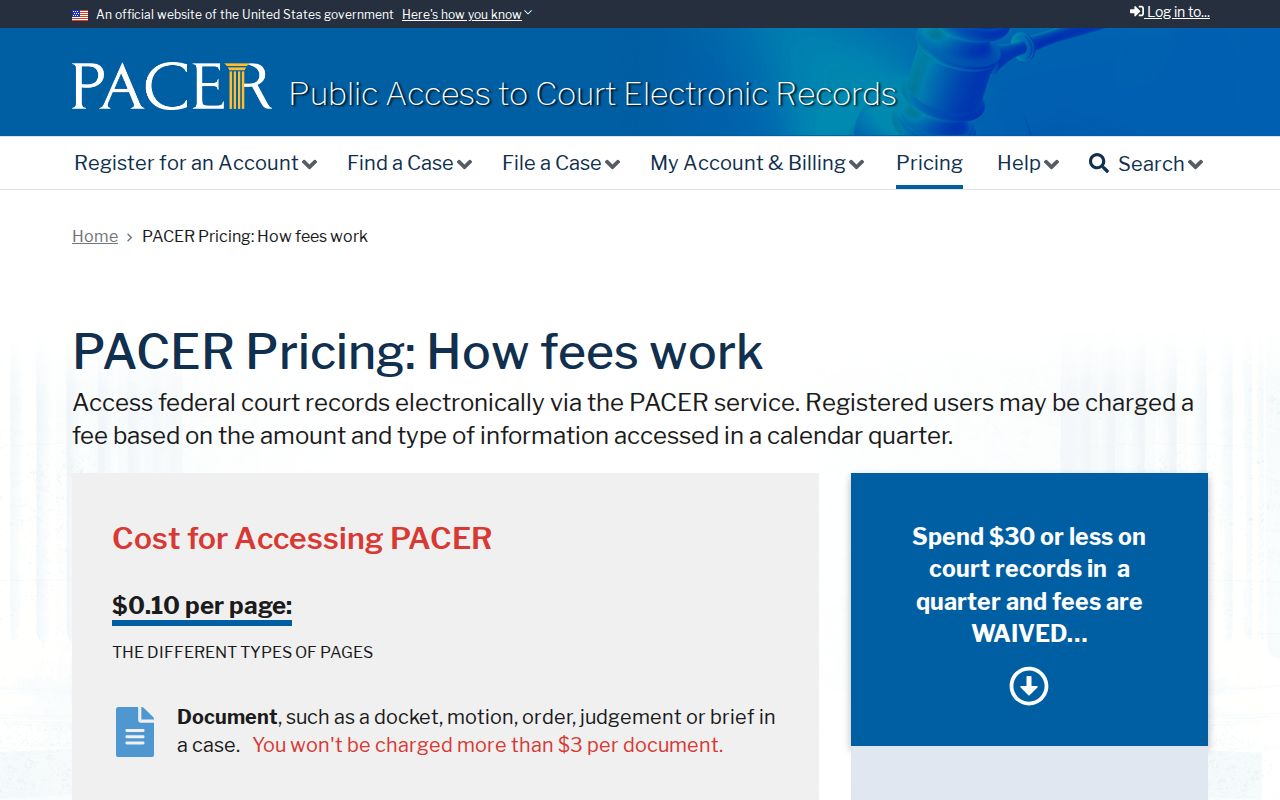
That PACER pricing page describes a federal records system. A Coal County warrant search never reaches it.